Curb Appeal After Dark: A Reno Homeowner's Guide to Better Exterior Lighting
Quick answer: Great nighttime curb appeal comes from highlighting your home's architecture, entryway, pathways, and landscaping without overdoing the brightness. The best exterior lighting designs use layers of light, consistent color temperatures, and a handful of carefully chosen focal points rather than lighting up every inch of the property.
Your home probably looks great at 3 p.m. The question is whether it looks great at 9 p.m., too.
Most Northern Nevada homeowners spend their curb appeal energy on daylight hours fresh paint, trimmed hedges, a clean driveway. But your home spends more than half its life in the dark, especially during Reno's shorter winter days. If nobody's planned for how it looks after sunset, you're only getting credit for half your investment.
The good news: you don't need to light up your entire property to make it stand out at night. You need to light up the right parts of it. That's the difference between a home that glows and a home that glares.
This guide walks through how to think about nighttime curb appeal, where Northern Nevada's climate and architecture should change your approach, and the mistakes we see most often when homeowners take this on without a plan.
What Is Nighttime Curb Appeal?
Nighttime curb appeal is the impression your home makes once the sun goes down. It's shaped by what's lit, what's left dark, and how those choices work together.
A home with strong nighttime curb appeal draws the eye to its best features a stone facade, an arched entryway, a mature tree the same way good daytime landscaping does. A home without it either disappears into the dark or gets lit so unevenly that the eye doesn't know where to land.
This isn't just about looks. Real estate professionals have pointed to exterior lighting as a feature that can boost a home's perceived value by as much as 20%. Homes with professional exterior lighting also tend to sell faster. Buyers notice a well-lit home before they notice almost anything else, because it's the first thing they see pulling into the driveway at a showing.
Start With Your Home's Architecture
Before you buy a single fixture, walk outside after dark and look at your house the way a stranger would.
What are its best features? A covered porch, a stacked-stone chimney, a row of dormer windows, these are the details that give your home character during the day. At night, they disappear unless light calls attention to them.
The general rule: light the building first, then the yard. A home with a beautifully lit lawn but a dark, flat facade still looks unfinished. Flip that priority, and even modest landscaping looks intentional because the house itself anchors the scene.
Uplighting works well for vertical features like columns and chimneys. Grazing light placed close to a textured surface and angled upward brings out the depth in stone, brick, or stucco that flat light flattens out.
Highlight Rooflines Without Overpowering Them
Rooflines are one of the most dramatic features on a home, and one of the easiest to get wrong.
Too much light along a roofline reads as a stage set, not a house. The goal is a clean, even glow that traces the architecture without calling attention to the fixtures themselves. You want guests to notice your roofline, not your light strip.
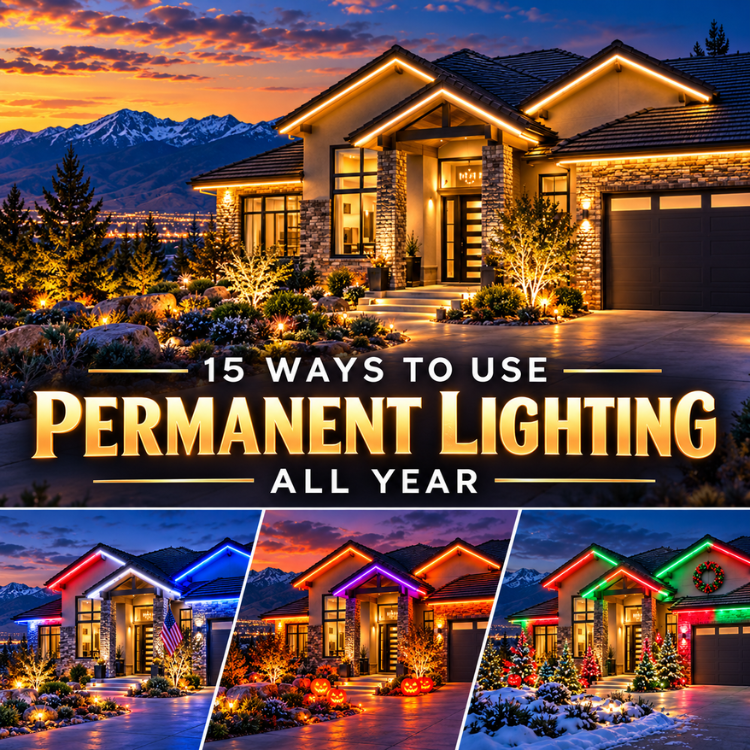
This is where permanent LED track lighting earns its reputation. Mounted seamlessly along the roofline, it delivers consistent, even light without any visible hardware or dangling cords. You get the clean look of architectural lighting with none of the seasonal setup that string lights demand.
Don't Forget Landscaping
Northern Nevada's high desert landscape, with its native grasses, boulders, and drought-tolerant shrubs photographs beautifully during the day. At night, it goes flat without help.
Warm white light in the 2700K to 3000K range brings out texture in plants and rock without making your yard look clinical. A single well-placed uplight at the base of a mature tree can do more for your yard's nighttime presence than a dozen scattered path lights.
Consider a "moonlighting" effect for larger trees mounting a downlight high in the branches to cast a soft, dappled glow on the ground below. It mimics real moonlight and avoids the harsh, direct-beam look of ground-up lighting.
Create a Welcoming Entryway
Your front door is the single most important spot on your property to light well. It's where every guest, delivery driver, and potential buyer forms their first real impression.
Warm white light, again in that 2700K to 3000K range, makes an entryway feel inviting rather than institutional. Wall sconces on either side of the door add a layer of ambient light, while a path light or two along the walkway leading up to it extends that welcome before guests even reach the porch.
Skip the single bare bulb over the door. One light source creates harsh shadows across your face and your door. Two or three softer light sources, layered together, create a space that feels finished.
Use Pathway Lighting Strategically
Pathway lighting exists to do two things: keep people safe and guide their eye toward your front door. It's not meant to turn your walkway into a runway.
Low, directional fixtures spaced evenly but not too closely light the path without creating a row of glowing dots that competes with everything else you've lit. As a general guideline, space path lights far enough apart that each pool of light slightly overlaps with the next, rather than lighting every single paver.
Angle fixtures downward. A pathway light that shines into pedestrians' eyes defeats its own purpose and undercuts the elegant look you're building everywhere else.
Consider Your Backyard and Outdoor Living Areas
Reno's dry climate and mild evenings make outdoor living a bigger part of life here than in a lot of other places. If your lighting plan stops at the front yard, you're missing the space where you'll actually spend your time.
Patios, pergolas, and fire pit areas benefit from the same layered approach as your front entry: ambient light for the overall space, task light for cooking or reading areas, and accent light for any features worth showing off, like a water feature or a built-in bar.
Keep the color temperature consistent with the rest of your home's exterior. A backyard that suddenly shifts to cool white light while the front of the house glows warm white feels disjointed, even if no one can immediately say why.
Warm White vs. Cool White Exterior Lighting
Every exterior light bulb falls somewhere on the Kelvin scale, which measures color temperature from warm (lower numbers) to cool (higher numbers). Residential bulbs generally range from about 2000K to 6500K.
Warm white light, in the 2700K to 3000K range, gives off a soft, slightly yellow glow. It's the closest match to how natural light looks at dawn and dusk, which is part of why it feels so natural on a home's exterior after dark. This is the right choice for entryways, architectural accents, and most landscaping.
Cool white light, above 4000K, reads as bright and slightly blue. It has its place security lighting benefits from the extra visibility cool white provides but it rarely looks right as the primary tone for a home's facade. Mixing warm and cool white across the same property is one of the fastest ways to make an otherwise well-lit home look disjointed.
Choose warm white if your priority is curb appeal and ambiance. Choose cool white if a specific area, like a driveway or side entrance, needs maximum visibility for safety.
7 Exterior Lighting Mistakes We See Homeowners Make
After installing permanent lighting on more than 50 Northern Nevada homes, over the last year, a handful of mistakes show up again and again.
- Too much brightness. More light doesn't mean more curb appeal. Excess brightness washes out architectural detail instead of highlighting it.
- Too many focal points. Trying to light every tree, every corner, and every architectural detail leaves the eye with nowhere to rest. Pick three to five features and commit to them.
- Inconsistent color temperatures. Mixing warm and cool white across the same property is the single fastest way to make a lighting plan look unplanned.
- Poor fixture placement. A light aimed at the wrong angle can create glare, odd shadows, or a hot spot that draws attention to the fixture instead of the feature it's lighting.
- Visible hardware and wiring. Exposed cords and bulky fixtures pull focus away from the home itself, which defeats the purpose of architectural lighting in the first place.
- Ignoring glare. Lights that shine directly into windows, walkways, or a neighbor's yard create more irritation than appeal.
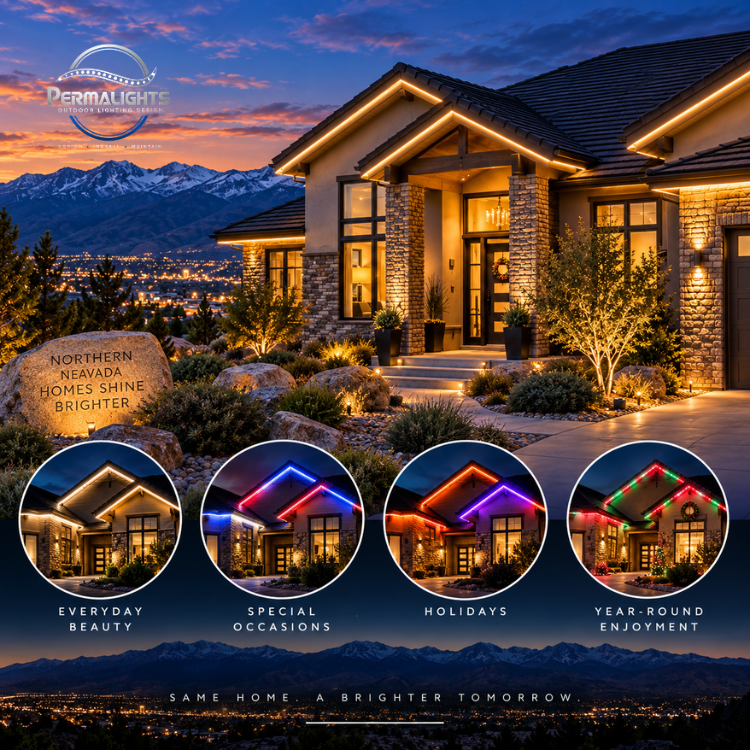
- Designing only for the holidays. A lighting plan built around one season leaves your home dark and forgettable the other eleven months of the year.
What 50+ Northern Nevada Installations, Over the Last Year, Have Taught Us About Great Exterior Lighting In Northern Nevada
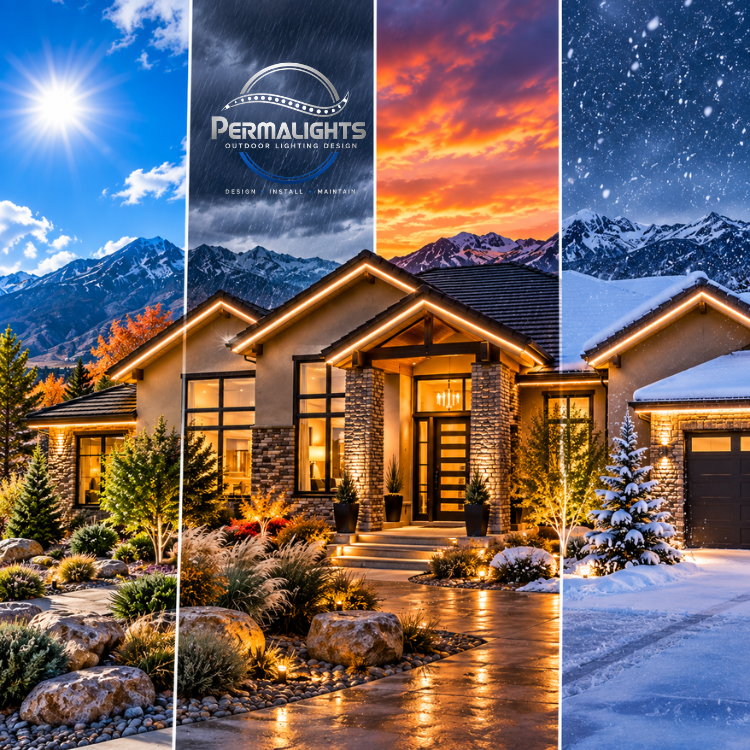
Every Reno home faces the same basic challenge: 100-plus-degree summers, freezing winter nights, and some of the clearest, darkest skies of any city its size. That combination changes both what lighting looks like here and what it needs to survive here.
Because our night skies are so clear, lighting choices make a bigger visual impact in Reno than they would in a city with more ambient light pollution. A well-placed warm white uplight on a stucco or natural stone facade, two of the most common exterior materials in this region, reads as dramatically brighter and richer here than the same fixture would in a denser urban setting.
That clear-sky advantage comes with a durability requirement. Fixtures here need to handle intense UV exposure in summer, sudden temperature swings during shoulder seasons, and snow load in winter. Homeowners who choose budget, non-weather-rated fixtures tend to be back out replacing bulbs and housings within a year or two. The ones who invest in properly rated, low-voltage LED systems from the start are the ones still happy with their lighting five years later.
The most common thing we hear after an installation isn't about the lights themselves, it's that homeowners didn't realize how different their home would look until they saw it done well. A thoughtful plan changes how a house reads from the street, and that's true whether it's a ranch-style home in a Sparks cul-de-sac or a two-story build overlooking the Truckee Meadows.
Create an Exterior Lighting Plan Before Buying Anything
A good exterior lighting plan starts with observation, not shopping.
Walk your property after dark and take photos. Note which features catch your eye during the day that disappear at night. Identify three to five focal points, not twenty, and think about how light will move a viewer's eye from the street to your front door.
Think in layers: architectural lighting on the home itself, accent lighting on landscaping, and path lighting for safety and guidance. Each layer should use a consistent, warm color temperature so the whole property reads as one cohesive design rather than a collection of separate decisions.
For anything beyond a few solar path lights, a professional consultation is worth the conversation. A trained eye can spot focal points you'd miss and knows how to avoid the glare, wiring, and placement mistakes that are hard to undo once installed.
See Your Northern Nevada Home Differently After Dark
A good lighting plan begins with your home's architecture, not with a box of lights off a shelf.
Walk outside tonight. Notice what disappears once the sun goes down. That's your starting point.
When you're ready to turn that walk-around into a real design, Permalights Reno offers a free in-home consultation. We'll map out a custom lighting plan built around your roofline, your landscaping, and your walkways, and show you exactly how it will look before any work begins.
Call Permalights Reno today at 775-414-9163 or request your free estimate today.
Frequently Asked Questions
What exterior lighting improves curb appeal most?
Architectural lighting on the home's facade and roofline typically delivers the biggest visual impact, followed by entryway lighting and accent lighting on mature trees or landscaping features.
What color temperature is best for exterior house lighting?
Warm white light in the 2700K to 3000K range works best for most exterior residential applications, including entryways, architectural accents, and landscaping. It creates an inviting look that mimics natural dusk lighting.
How bright should exterior lights be?
Brightness should match the purpose of each area; softer light for ambiance and architecture, brighter light for security or task areas like driveways. The goal is even, intentional illumination rather than maximum brightness everywhere.
Where should outdoor lights be placed?
Prioritize the home's facade and entryway first, then extend to pathways, landscaping, and outdoor living areas. Lighting the building before the yard creates a more finished look.
Is warm white better than cool white for exterior lighting?
For most of a home's exterior, yes. Warm white feels more natural and inviting. Cool white has a narrower, practical use case for security lighting where maximum visibility matters more than ambiance.
Can permanent lights be used as everyday architectural lighting, not just for holidays?
Yes. Permanent LED systems can be set to an elegant warm white year-round and switched to different colors or patterns for holidays and special occasions, all from a smartphone app.
Have any more questions?
Call Permalights Reno today at (775) 414-9163 for all your Permanent Exterior Lighting Needs