Outdoor Lighting in Reno: What Northern Nevada's Climate Means for Your Home
Quick answer: Exterior lighting in Northern Nevada has to survive more than winter snow. Reno-area homes face intense summer sun, wide temperature swings, high winds, dust, and freezing conditions, sometimes all in the same week. The materials, connections, mounting hardware, and installation quality of your lighting system determine whether it holds up for years or fails within a season.
If you've ever watched a strand of holiday lights fade, crack, or simply stop working after one Reno summer, you already know the truth: this climate is hard on outdoor fixtures. It's not just the cold months that cause problems. The high desert throws a little bit of everything at your home's exterior across the year, and each season tests a different weakness in cheaply made lighting.
That's why choosing exterior lighting for a Reno, Sparks, or Tahoe-area home takes more thought than picking whatever's on the shelf at a hardware store. You need a system built for your address, not for a mild coastal climate where lights rarely see snow or triple-digit heat. This guide walks through exactly what Northern Nevada's weather does to outdoor lighting, what to look for in a durable system, and how professional installation protects your investment for years, not months.
Why Northern Nevada Is Tough on Exterior Lighting
Reno sits in a high desert valley at 4,498 feet, with the Sierra Nevada rising to the west and more than 300 days of sunshine hitting your roofline every year. That elevation and dryness create a distinct set of stresses for anything mounted outside: strong UV exposure, dramatic swings between day and night temperatures, seasonal snow and ice, and wind events that can gust well past 50 mph across the Truckee Meadows.
Homes in Verdi, Washoe Valley, and Incline Village deal with heavier snow loads, while properties in Spanish Springs, Lemmon Valley, and Cold Springs often see more wind and dust. No matter where you live in the region, your exterior lighting needs to handle all of it, not just one season's worst weather.
Summer Heat and UV Exposure
Nevada summers push average highs to 84.6°F, with daily highs climbing well past that during heat waves. Add in over 300 days of direct sun each year, and UV exposure becomes a real threat to anything mounted outside. Cheap plastic housings turn brittle and yellow. Rubber seals dry out and crack. Once a seal fails, moisture and dust get in, and that's when lights start flickering or dying altogether.
Commercial-grade LED fixtures are built with UV-stabilized housings specifically to resist this kind of sun damage. You get a system that keeps its color and structural integrity year after year, instead of one that needs replacing after two or three Reno summers.
Temperature Swings
Northern Nevada doesn't just get hot. It swings. Nighttime lows drop below freezing from October through April, while daytime highs in those same months can reach the 60s or 70s. That daily expansion and contraction stresses seals, connectors, and wiring in ways that milder climates never test.
LEDs handle this better than most people expect. LED fixtures are rated to perform in temperatures ranging from -25°F to 140°F, and unlike incandescent or fluorescent bulbs, they don't rely on heat-sensitive components like mercury vapor to produce light. Where older bulb types lose brightness or fail outright in the cold, LED output actually holds steady, and in some cases improves, as temperatures drop.
Snow, Ice and Freezing Temperatures
Winter is the season most homeowners think about first, and for good reason. Snow load, ice buildup, and freezing moisture can crack poorly sealed fixtures and short out exposed connections. If you've dealt with lights failing the week a storm rolls through, you've seen this firsthand.
We've covered the specifics of snow and ice protection in detail in our dedicated guide on winter-ready outdoor lighting. The short version: sealed connectors and waterproof housings prevent moisture from working its way in during freeze-thaw cycles, which is exactly when most winter lighting failures happen.
Wind Exposure in the Truckee Meadows
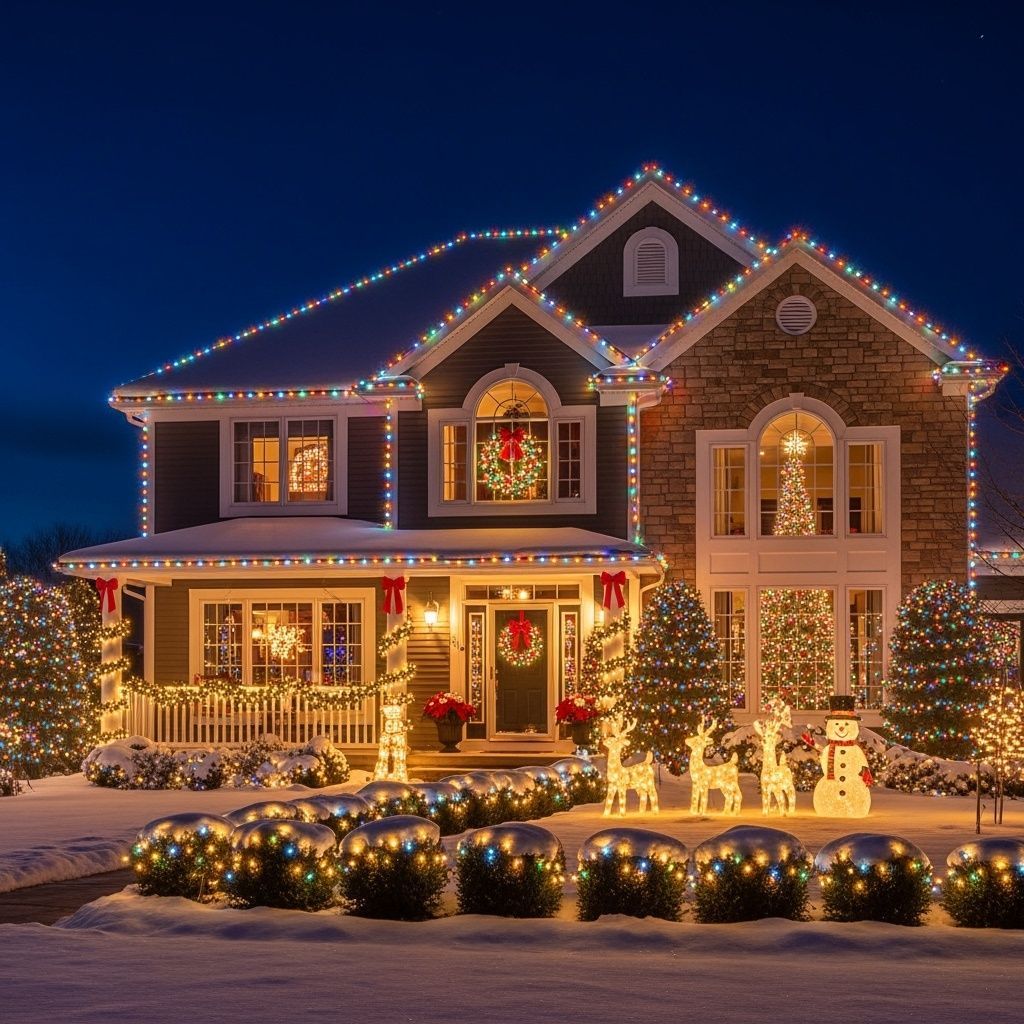
Wind is an underrated threat to exterior lighting. High wind warnings across the Truckee Meadows regularly bring gusts of 50 mph or more, and stronger storms have pushed gusts above 70 mph. String lights draped loosely along a roofline flap, stretch, and eventually pull free of their clips. Loose connections caused by wind stress are one of the most common reasons temporary lighting fails mid-season.
Permanently mounted track lighting, secured directly to the roofline with commercial-grade hardware, doesn't move with the wind the way hung strands do. That stability is as much about the mounting system as it is about the light itself.
Dust, Rain and Moisture Protection
Dry summers followed by wet winter storms create a two-part challenge: dust infiltration for most of the year, and moisture exposure when precipitation finally arrives. Northern Nevada summers are typically dry, so dust and debris build up on and around fixtures for months before rain or snow washes through. Any gaps in a fixture's housing let that dust settle into places it can damage wiring or connections.
Fully sealed components address both problems at once. When housings, connectors, and power supplies are sealed against solids and liquids, dust accumulation and moisture intrusion stop being a concern regardless of the season.
What Does an IP Rating Mean for Outdoor Lighting?
You'll often see outdoor lighting described with an IP rating, like IP65, IP67, or IP68. IP stands for Ingress Protection, and the rating tells you how well a fixture resists solids like dust (first number) and liquids like water (second number).
Here's what the numbers actually mean:
- IP65: Water-resistant. Protected against water jets from any direction, but not designed for submersion.
- IP67: Protected against temporary submersion, up to about one meter for 30 minutes.
- IP68: The highest protection level available. Fixtures are sealed against dust entirely and can withstand continuous or extended submersion.
For Reno-area homes, this rating matters because it translates directly into weather performance. An IP68-rated system means every connector, light, and power supply is completely sealed against rain, snow, moisture, and dust, which is exactly the combination Northern Nevada throws at exterior fixtures throughout the year. Choose IP68-rated lighting if you want a system that doesn't need to be reconsidered every time the forecast changes.
Why Mounting and Installation Matter as Much as the Lights
Even the best-rated fixture fails if it isn't installed correctly. Mounting hardware needs to hold firm through wind gusts, temperature-driven expansion and contraction, and the weight of snow and ice. Wiring needs to be routed and protected in a way that keeps moisture out of every connection point, not just the fixture housing itself.
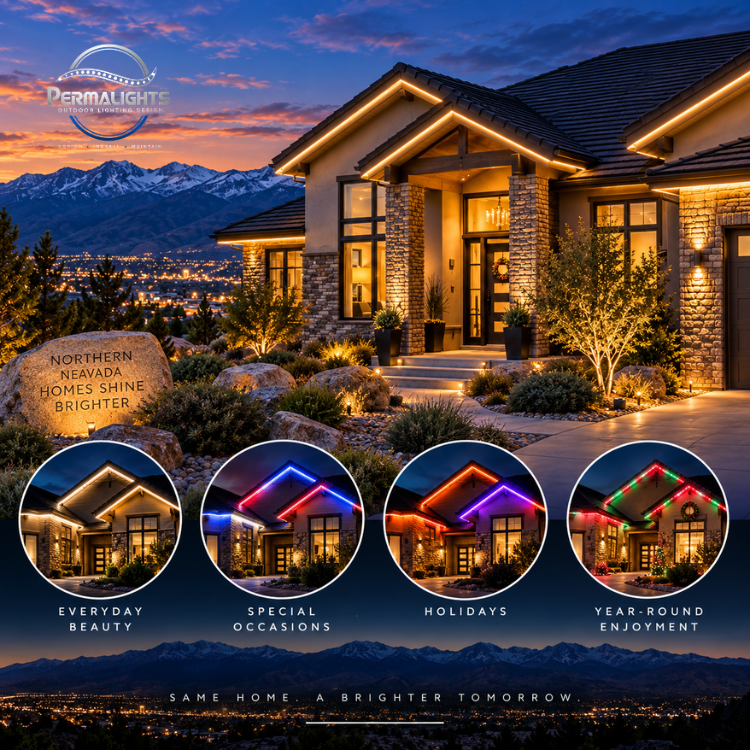
This is where professional installation earns its value. A trained installer, such as Permighlights in Reno, accounts for your specific roofline, your home's exposure to wind and sun, and the drainage patterns around your property. Most professional installations are completed in one or two days and come backed by a warranty, typically five years on parts and one year on labor, so you're not left guessing whether the mounting will hold up through the next windstorm or snow season.
What We've Learned From Installing Lighting in Northern Nevada
After completing installations across Reno, Sparks, and the surrounding valleys, a few patterns show up again and again. Homes at higher elevations or closer to the Sierra front, like those in Verdi or Incline Village, need extra attention to snow load and ice damming. Properties in windier, more exposed areas like Spanish Springs or Lemmon Valley benefit from reinforced mounting points. And nearly every home, regardless of location, sees less long-term fading and cracking when fixtures are UV-stabilized rather than standard-grade plastic.
The common thread: a lighting system designed for a generic climate rarely performs well here. One built specifically around Northern Nevada's conditions holds up season after season.
Exterior Lighting Checklist for Northern Nevada Homeowners
Before you invest in exterior lighting, run through this list:
- Does the system carry an IP66 rating or higher, ideally IP68, for full dust and water protection?
- Are the housings UV-stabilized to resist sun damage from 300+ days of annual sunshine?
- Is the fixture rated to operate in temperatures from well below freezing to well above 100°F?
- Is the mounting hardware rated to withstand wind gusts of 50 mph or more?
- Does the installation include sealed, protected wiring at every connection point?
- Is the system backed by a warranty that covers both parts and labor?
If a lighting system checks every box, it's built for this climate. If it's missing more than one, expect problems before your first full year is up.
Choose a System Built for Where You Live
Exterior lighting needs to look good on your home, but it also needs to survive everything Northern Nevada's weather sends its way: the summer sun, the freezing nights, the windstorms, and the snow. A system that isn't built for this specific climate will show its weaknesses fast, usually right when you need it most.
Permalights Reno can evaluate your property, your roofline, and your lighting goals, then put together a free custom estimate built around what your home actually faces each year. Schedule your free in-home consultation and get lighting that's ready for every season, not just the easy ones.
Frequently Asked Questions
What does IP68 mean for outdoor lighting?
IP68 is the highest ingress protection rating available. It means a fixture's housing, connectors, and power supply are fully sealed against dust and can withstand extended submersion in water. For outdoor lighting, this translates to complete protection against rain, snow, moisture, and dust year-round.
Can outdoor LED lights handle snow?
Yes, when they're properly sealed. LED fixtures with IP68-rated components and sealed wiring connections resist moisture intrusion during freeze-thaw cycles, which is when most winter lighting failures occur. Fixtures without adequate sealing are far more likely to short out or crack under snow and ice.
Does Nevada's sun damage outdoor lights?
It can, especially with lower-quality materials. Reno gets more than 300 days of sunshine per year, and constant UV exposure causes plastic housings to become brittle and rubber seals to crack over time. UV-stabilized fixtures are built to resist this kind of degradation.
Can permanent lighting withstand Northern Nevada's high winds?
Properly installed permanent track lighting, mounted directly and securely to the roofline, holds up far better than string lights in high wind. Truckee Meadows wind gusts regularly exceed 50 mph, and loose or hung lighting is much more prone to wind damage than fixtures anchored with commercial-grade hardware.
Does cold weather affect LED performance?
LEDs perform well in cold temperatures, generally rated to operate between -25°F and 140°F. Unlike traditional bulbs, LEDs don't rely on heat-sensitive components to produce light, so their output stays consistent, and sometimes even improves, as temperatures drop.
What should I look for in weather-resistant outdoor lighting?
Look for an IP66 rating or higher (IP68 for maximum protection), UV-stabilized housings, a wide operating temperature range, wind-rated mounting hardware, sealed wiring connections, and a warranty covering both parts and labor.