It Gets Dark Early in Reno: Exterior Lighting for Safety
Quick answer: By November, Reno homes go dark before 5:30 pm, exposing unlit steps, driveways, and entryways. Exterior lighting design solves this with three layers: architectural, pathway, and security lighting that keep your home safe, visible, and welcoming all evening, every night of the year.
You pull into the driveway at 5:15 pm, and the porch light is the only thing standing between your guests and a dark front walk. Sound familiar? It should. By early November, Reno loses nearly an hour and a half of daylight almost overnight, and homeowners who never thought much about outdoor lighting suddenly notice every dark corner of their property.
This isn't a holiday-lights problem. It's a year-round visibility problem that happens to get a lot more obvious once the clocks change.
Shorter Days Reveal Exterior Lighting Problems
You don't choose when the sun sets. But you can choose how your home handles it.
On October 1, Reno gets sunset around 6:40 pm and close to 11 hours and 45 minutes of daylight. Fast forward to November 1, just after Daylight Saving Time ends, and sunset drops to 4:54 pm with only about 10 hours and 25 minutes of daylight (timeanddate.com, 2026). By November 15, the sun is down by 4:40 pm. That's more than an hour of daily life your commute home, dinner prep, dog walks, deliveries that now happens after dark.
This is when the gaps show up. A driveway that looked fine in August is suddenly a hazard. Steps you've climbed a thousand times are harder to find. Delivery drivers hesitate at the curb, unsure where your entrance actually is. Guests park and walk through shadows to reach your door. Side yards disappear entirely. And by 5:30 pm, your home itself seems to vanish into the dark, no matter how much curb appeal it has in daylight.
None of this requires a renovation to fix. It requires a lighting plan.
Start With the Front Door
Your front entrance is the first thing anyone sees after dark, and it deserves the most attention on your property. Skip the single bare bulb over the door. One harsh source creates deep shadows and makes your entryway feel exposed instead of inviting.
Instead, layer two or three softer sources: wall sconces on either side of the door, paired with a path light or two leading up to it. Warm white light in the 2700K–3000K range makes an entryway feel welcoming rather than clinical. Get this right, and your front door stops being a dark gap in the evening and starts being the first impression you actually want guests, delivery drivers, or potential buyers to have.
Light Steps and Walkways Without Creating Glare
Steps and walkways are where safety and style meet, and getting the placement wrong undoes the benefit entirely.
Low, directional path lights work best. Space them so each pool of light slightly overlaps the next one, creating a continuous, readable path instead of a string of isolated bright spots. Angle every fixture downward. A path light that shines into a pedestrian's eyes doesn't help them see the ground. It blinds them to it, which defeats the entire purpose of the fixture.
Done well, pathway lighting disappears into the landscape during the day and quietly does its job every night, guiding feet without announcing itself.
Where Security Lighting Makes Sense
Not every part of your property needs the same light. Driveways, side entrances, gates, side yards, and backyards all benefit from functional security lighting that prioritizes visibility over ambiance.
These are the areas homeowners mention most when their house "disappears after 5 or 6 pm": the driveway where you park after a late shift, the gate your dog uses, the side entrance where the garbage cans live. Cool white light, above 4000K, has a narrower but important use here. It delivers maximum visibility in spots where seeing clearly matters more than setting a mood.
The goal isn't to floodlight your entire yard. It's to make sure the specific areas where people walk, park, and enter are never left guessing in the dark.
Security Lighting Doesn't Have to Look Like a Floodlight
Here's the trade-off homeowners run into: security lighting is supposed to help you feel safer, but a single oversized floodlight often does the opposite. It creates harsh glare, blinds you when you step outside, and throws stark shadows that make a side yard feel more unsettling, not less.
This is where lighting design matters more than wattage. Rather than installing a single all-purpose floodlight, a designer positions multiple smaller fixtures to eliminate shadows and even out coverage. The result is a side yard or driveway that's fully visible without a glaring hot spot aimed at your neighbor's window or your own.
Choose warm white if curb appeal and ambiance matter most for an area. Choose cool white if a specific spot, like a driveway or side entrance, needs maximum visibility for safety. The two aren't in competition. A well-designed property uses both, in the right places.
Combine Three Layers for a Property That Works After Dark
The homes that look great and function well after sunset aren't lit with one type of fixture. They're built on three layers working together.
Roofline and architectural lighting outlines the home itself, so it doesn't disappear into the night the moment the sun goes down. Pathway and landscape lighting guides feet safely along walkways and highlights the plants, trees, and features you've invested in. Functional and security lighting covers the driveway, gates, and side entrances where visibility matters most.
Keep the color temperature consistent within each layer, and your property reads as one cohesive, intentional design instead of a patchwork of mismatched fixtures.
Common Exterior Lighting Problems We See Around Reno Homes
After installing permanent exterior lighting in Northern Nevada homes, a handful of mistakes come up again and again:
- Overly bright floodlights that create glare instead of usable visibility.
- Dark stairs that get overlooked because the focus goes to the yard or the roofline instead.
- Glare into windows, where a fixture aimed at the wrong angle lights up a living room instead of a walkway.
- Mismatched color temperatures, where warm entryway light clashes with cool floodlights a few feet away.
- Poor fixture direction, sending light up into the sky or into a neighbor's yard instead of down where it's needed.
- Completely dark side yards, the most commonly overlooked space on a property until someone has to walk through one at night.
Most of these aren't expensive fixes. They're placement and planning problems, which is exactly what a lighting design process is meant to catch before installation, not after.
Why Should You Create a Lighting Plan Before Winter?
Because a plan lets you fix these issues once, instead of patching them fixture by fixture every year as the days get shorter.
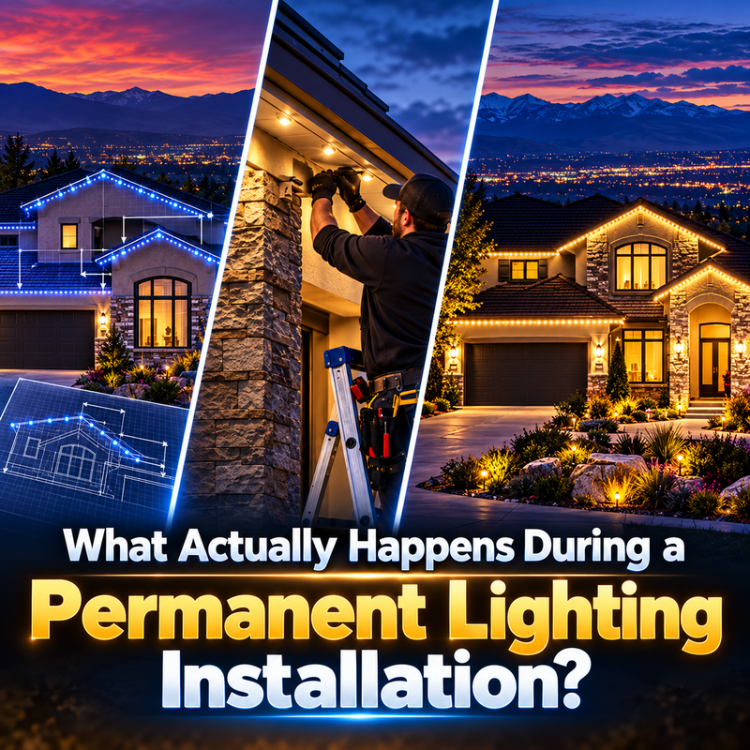
A lighting plan maps out where each layer goes, what color temperature each area needs, and how the pieces work together before anyone installs a single fixture. That means no glare you discover after the fact, no mismatched bulbs added piecemeal over a few seasons, and no dark side yard that keeps getting overlooked.
Seeing a property before and after is the clearest way to understand what a plan actually changes. A dark porch becomes an inviting entry. A shadowed driveway becomes a space you can walk across without hesitation.
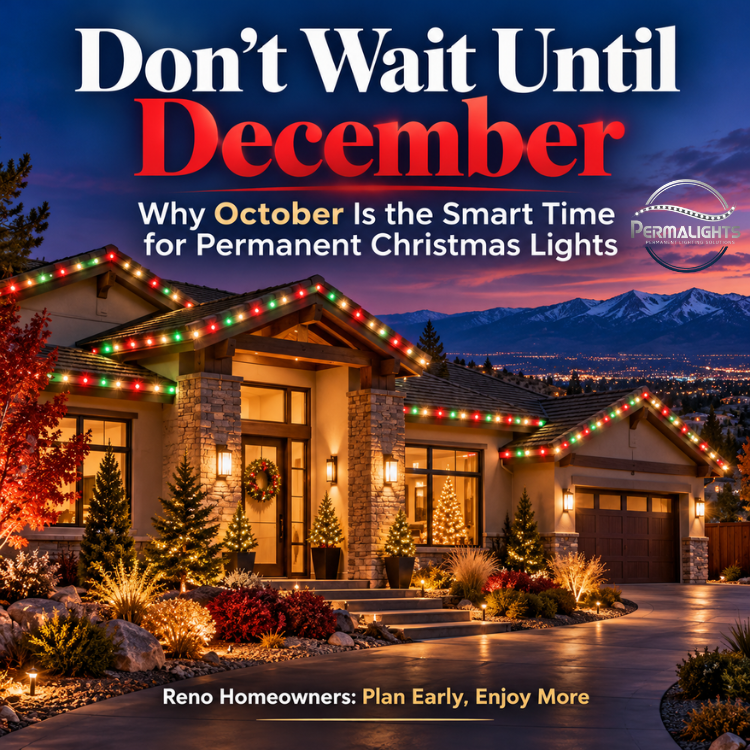
Reno's climate adds another reason to plan ahead rather than patch things together. Triple-digit summers, freezing winter nights, and clear dark skies all put stress on fixtures that weren't built for it. Non-weather-rated lights often need replacing within a year or two. A properly designed, low-voltage system is built to handle those swings, which means your plan holds up instead of needing a redo every season.
Walk Your Property Tonight
Walk around your property after sunset tonight. If you find dark walkways, disappearing architecture, or poorly illuminated entrances, those are the places to start. Permalights in Reno, NV, can help create a custom exterior lighting plan for your home. Call 775-414-9163 or request a free in-home consultation to get started before the days get any shorter.
Frequently Asked Questions
Can permanent lighting be used for more than holidays?
Absolutely. Smartphone-controlled permanent lights can provide subtle warm-white architectural lighting most evenings, then switch to team colors, holiday scenes, or party patterns whenever you want. With professionally installed, IP68-rated components, your home gets year-round curb appeal without seasonal setup, storage, or ladder work.
How much does exterior lighting design cost in Reno?
Cost depends on the size of your property, the number of focal points, and how many layers (architectural, pathway, security) you include. A free in-home consultation is the best way to get a price specific to your home.
How long does a lighting installation take?
Most residential installations are completed in one or two days, with minimal disruption to your routine, since the process starts with a design plan that's finalized before any work begins.
Will exterior lighting work through Reno's winters?
Yes, when the components are properly rated for the climate. Fixtures need to handle UV exposure, large temperature swings, and snow load. Budget, non-weather-rated lights are the ones that typically fail within a year or two.
What's the difference between permanent and seasonal lighting?
Permanent lighting is installed once along your roofline and stays in place year-round. You can run it in warm white every day and switch colors or patterns for holidays through a smartphone app, with no ladders, cords, or seasonal takedown required.
Who is exterior lighting design for?
It's for any homeowner who wants their property to be visible, safe, and welcoming after dark, not just during the holidays. That includes anyone dealing with a dark driveway, unlit steps, a disappearing side yard, or a front entrance that doesn't feel inviting once the sun goes down.
Have any more questions?